Introduction: A Routine Stop That Escalated Into a Legal Battle
On an otherwise ordinary evening, in a quiet condo parking garage, a routine stop would trigger a confrontation that would lead to a landmark legal case. The situation began with a parking issue, escalated by an officer’s assumption and his own racial bias, and ended with a monumental settlement that forced the city to acknowledge its failings.
The officer in question, a seasoned member of the force, was convinced that his actions were justified, yet what he didn’t know was that the woman he was accosting had years of legal experience and authority. Alana Brooks, the woman in question, wasn’t just any resident of the building. She was a Federal Magistrate with years of experience overseeing cases involving civil rights violations and police misconduct.
What followed was not only an unlawful detention but a public humiliation of an officer who believed that his authority was above reproach. This article delves into the details of that encounter, how a simple parking dispute turned into a national controversy, and the broader implications it had for police accountability and racial profiling.
The Encounter: The Officer’s Assumptions and Escalation
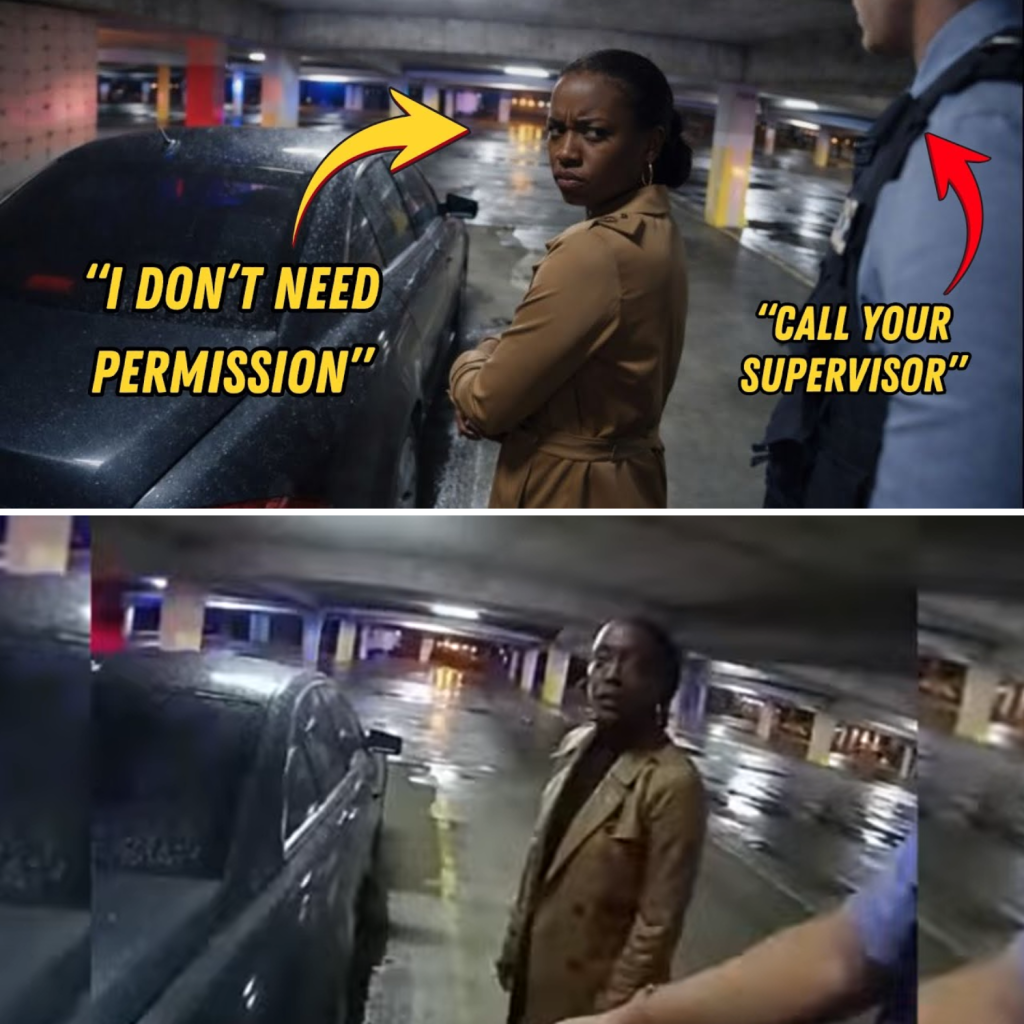
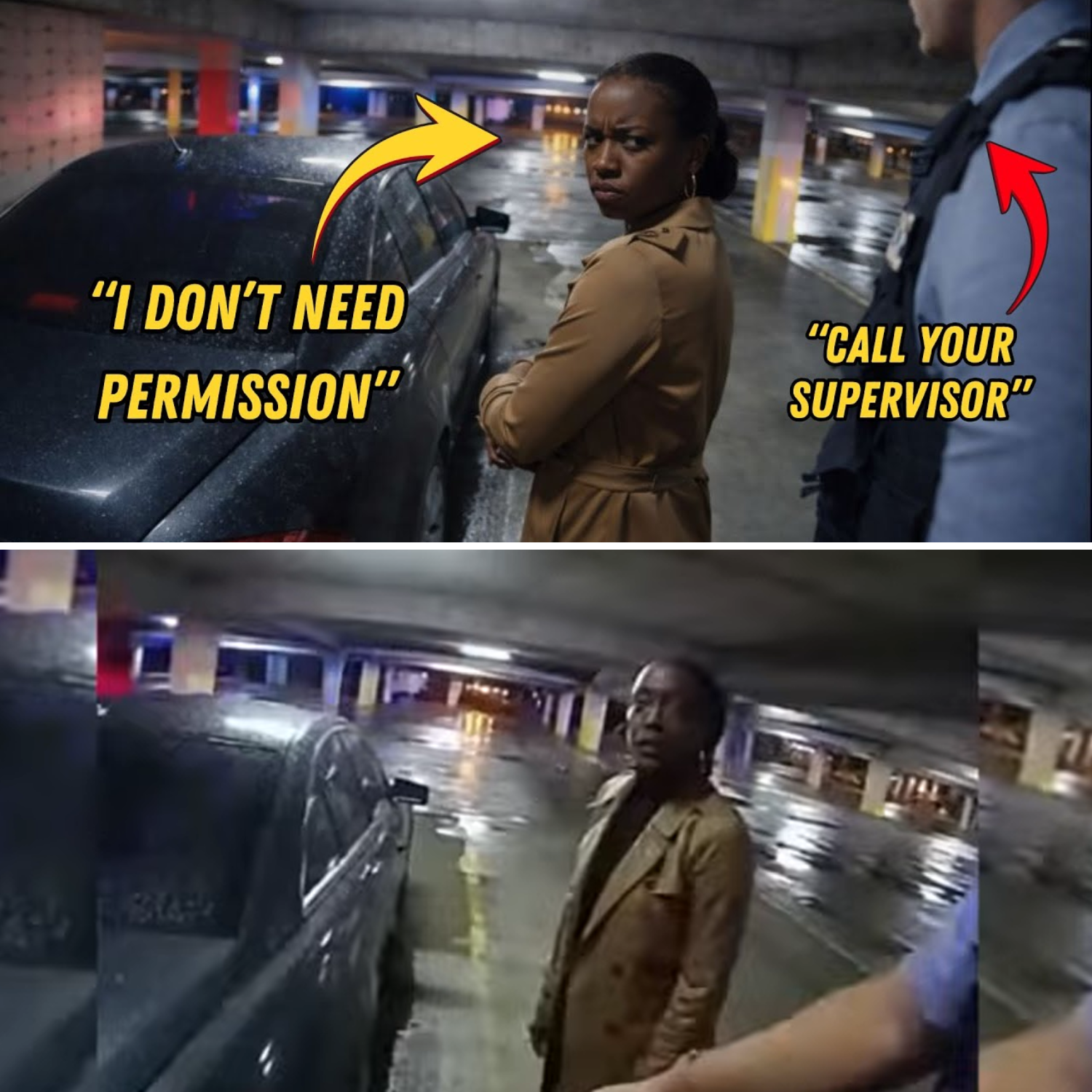
Alana Brooks was standing beside her car in the parking garage when Officer Daniel Ree approached her. At first glance, there was nothing unusual about the situation. She was simply unloading her groceries, heading to her condo after a long day of work. However, Officer Ree approached her as if she were a criminal, demanding that she step away from her vehicle without offering any explanation.
“You can’t park here. Step away from the vehicle,” he demanded, raising his voice and asserting his authority.
Alana, calm and composed, responded, “I live here. This is my car. What crime do you suspect?” She knew the law, and she wasn’t about to let an officer abuse his power without justification.
Ree, however, was undeterred. He insisted that she move away from the car, claiming that he had received a call about a suspicious person in the area. His language was vague, and his actions were unwarranted. “You fit the description,” he said, without offering any specifics.
Alana, remaining level-headed, clarified that there was no violation of the law. “You’re detaining me without probable cause,” she pointed out, which immediately triggered the officer’s defensive response. His behavior shifted from authoritative to aggressive, escalating the situation unnecessarily.
The Turning Point: A Woman Who Knows Her Rights
It’s important to note that this was not a routine civilian encounter for Alana. As a Federal Magistrate, she had seen firsthand how law enforcement officers, especially those prone to racial bias, could use their authority to intimidate and unjustly detain people of color.
Unlike many others who may have felt helpless or intimidated in such a situation, Alana was equipped with the knowledge and experience to recognize when her rights were being violated. She stayed calm, firm, and unapologetic. When Ree continued to insist that she move away from the vehicle, she asked for clarification: “On what legal basis are you detaining me?”
Alana’s demeanor was controlled, but her words carried the weight of someone who had spent years working within the legal system. She was not going to allow this officer to undermine her rights or her dignity.
However, Officer Ree didn’t seem to be listening. He had already made up his mind about Alana based on her race and his own biases. He assumed she was just another “problem” in the parking garage, a person who wouldn’t challenge his authority. His prejudice made him act first and ask questions later.
The Shift in Power: A Supervisor’s Intervention
As the situation escalated, it was not just Alana’s calmness that stood out—it was the way the crowd began to react. More and more bystanders had started recording the encounter. Phones appeared out of nowhere, and the officer, who had once been confident and unchallenged, now found himself under the scrutiny of witnesses and cameras.
Alana continued to stand her ground, asking for the officer’s identification, the reason for his actions, and his badge number. She knew that the presence of cameras and witnesses was her protection. And it wasn’t just the onlookers that saw what was happening. The officer’s actions had caught the attention of other residents and, importantly, a supervisor who was nearby.
Officer Ree’s demeanor shifted when his supervisor, Sergeant Linda Morales, arrived. Unlike Ree, Sergeant Morales did not rush to defend her colleague’s actions. Instead, she took a step back and carefully assessed the situation. She realized, with just a glance at the ID that Alana had provided, that she was dealing with someone far more experienced and knowledgeable about the law than Ree.
Sergeant Morales immediately recognized the gravity of the situation. Alana Brooks wasn’t just a resident being harassed—she was a Federal Magistrate, and Officer Ree had overstepped in a way that could cost him his career.
The Fallout: A $3.1 Million Settlement and Legal Repercussions
What followed was a flurry of events that would ultimately lead to legal action, widespread media coverage, and significant consequences for Officer Ree and the city.
Alana’s decision to remain calm and composed in the face of such injustice played a key role in holding the officer accountable. After the incident, she filed a formal complaint, and her legal background ensured that the case was treated with the seriousness it deserved. Within days, the city had no choice but to investigate.
The footage captured by bystanders, combined with Alana’s careful documentation of the event, exposed Officer Ree’s actions as a clear case of racial profiling and abuse of power. The city’s legal department, under immense public pressure, quickly realized they could not defend Ree’s actions.
In an unprecedented move, the city settled the case for $3.1 million, the largest civil rights settlement in the city’s history. While the settlement did not admit guilt, it was clear to everyone involved that the city was paying for its failure to prevent such incidents from occurring in the first place.
Officer Ree, who had been on administrative leave since the incident, was eventually fired. His actions had not only violated Alana’s rights but had also exposed a deeper systemic issue within the police force. His prior history of complaints, which had been dismissed without consequence, was now coming under scrutiny.
Alana’s decision to take action, not just for herself but for the countless others who had suffered in similar situations without recourse, had far-reaching consequences. It wasn’t just about the money—it was about sending a message that racism and abuse of power would no longer be tolerated.
The Impact: A Shift in Accountability and Policy Reform
The settlement was just the beginning of the reforms that followed. The incident sparked a series of changes in the city’s police department. A new oversight committee was established, body camera footage became more closely monitored, and racial bias training was made mandatory for all officers.
Most importantly, Alana’s case highlighted the need for accountability within law enforcement. It wasn’t enough to simply call out racism and abuse of power; the system had to be held accountable for its failures. And with the city’s legal department backing the reforms, it was clear that the city was moving in the right direction.
Alana’s story became a symbol of resilience and justice. She had not only won a financial settlement but had also pushed for structural change. Her decision to speak out and demand accountability had set a precedent for other individuals who faced similar discrimination.
Conclusion: A Legacy of Change and Accountability
In the end, what started as a routine traffic stop turned into a landmark moment for civil rights and police accountability. Officer Ree’s actions were a stark reminder of how deep-rooted racial bias can influence decisions, even in seemingly mundane situations. But Alana’s response—her calm demeanor, her insistence on knowing her rights, and her commitment to seeking justice—turned the tables on an officer who had assumed his power was unquestionable.
The $3.1 million settlement was more than just a financial payout—it was a victory for the countless individuals who had been unjustly treated by law enforcement simply because of their race. It sent a powerful message that abuse of power would not go unchallenged, and that the truth, when properly documented, could not be ignored.
Alana Brooks’ legacy will be one of courage, resilience, and a reminder that accountability, no matter how uncomfortable, is the only path forward.