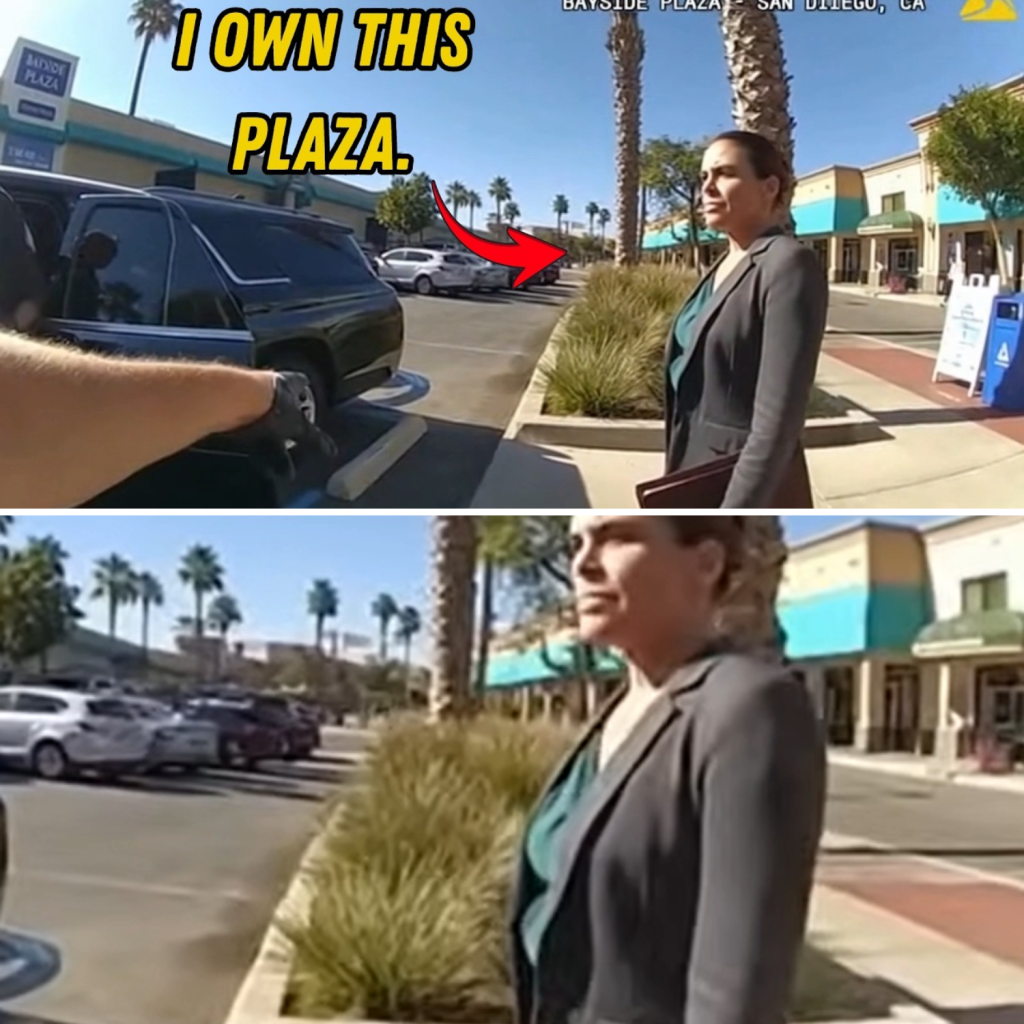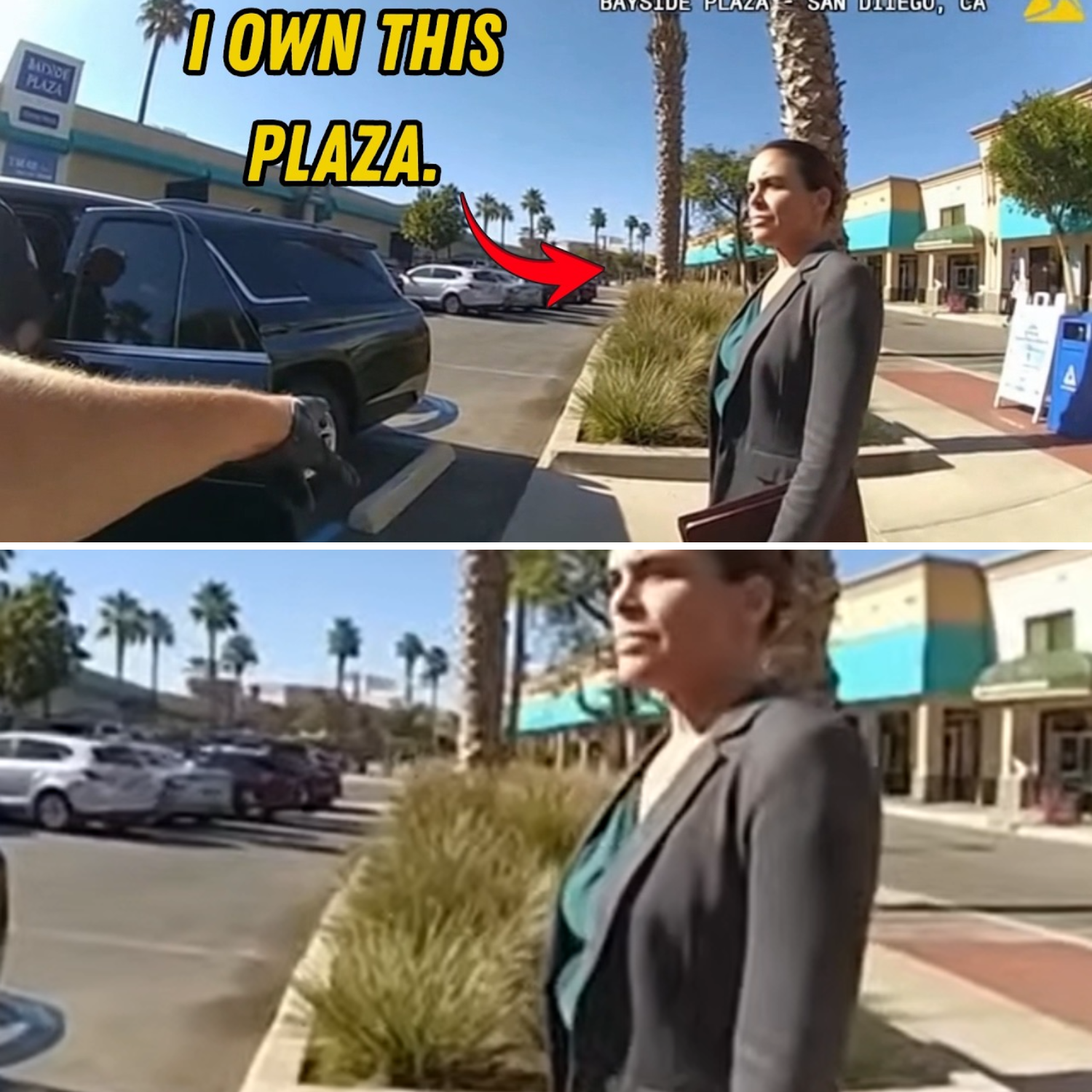
In a quiet California neighborhood, a situation that began as a routine parking dispute would soon evolve into an incident that would shake the Fairfield police department and ignite a conversation about systemic bias in law enforcement. On a crisp Tuesday morning in September 2023, Elena Vance, a successful businesswoman and property owner, found herself handcuffed in front of her own building, her luxury car being towed, and her rights violated by an officer who refused to see her for who she truly was. What followed was a public reckoning for the officer involved, a multi-million-dollar lawsuit, and systemic changes within the police department.
The Setting: A Simple Day, An Inexplicable Incident
Elena Vance was not just another business owner—she was a woman who built her empire from the ground up, using hard work, patience, and persistence. At 58, she had become the owner of Bayside Plaza, a high-end commercial property located in the heart of the tech district. A regular Tuesday morning saw Elena heading to the Plaza for a quick inspection of renovations in the north wing, something she had done countless times before. She parked her car—an elegant Range Rover—in the management-only parking spot, a spot clearly marked by a sign that read, “Reserved for Management. Unauthorized vehicles will be towed.”
It wasn’t the first time she had parked there. In fact, it was her designated spot. As the owner of the Plaza, she had every right to park in that space. Little did she know, Officer Kyle Braden, patrolling the area on his evening shift, would decide that her car didn’t belong there.
The Officer’s Assumptions: Prejudice at Play
Officer Braden had been on the Fairfield County police force for five years, long enough to have developed certain biases, but not long enough to understand the gravity of his assumptions. As he pulled into the parking lot, he saw Elena’s car and immediately made assumptions based on her appearance and the area. To him, a black woman driving a high-end car in a restricted parking spot was a violation. His mind filled in the blanks with racial prejudice rather than curiosity or investigation.
He approached Elena’s vehicle aggressively, immediately ordering her to step away from the car without asking any questions. When she politely explained that the spot was hers and that she was the property owner, Braden responded with mocking disbelief. This wasn’t a typical exchange for Elena, but she remained calm and composed, trying to reason with the officer. But Braden had already made up his mind. The more Elena tried to assert her ownership, the more Braden grew irritable and dismissive.
The Escalation: From Simple Questioning to Arrest
As the situation unfolded, Elena attempted to de-escalate the moment. She offered to show Braden her identification and the deed to the property, but Braden dismissed her outright. His hand hovered near his holster as he demanded she step back into the vehicle, claiming that she was obstructing a police operation. At this point, Elena realized that Braden wasn’t interested in resolving a minor parking dispute—he was seeking a confrontation.
Elena stood her ground, asserting her rights with quiet dignity. She informed Braden that she was asserting her Fourth Amendment rights and that his actions were unlawful. She reached for her phone to record the interaction. It was at that moment that Braden’s temper flared. He threatened to arrest her for trespassing, even though she was on her own property. Elena refused to back down, and the officer escalated the situation by calling for a tow truck.
The Arrest: Power and Prejudice Collide
As Braden called for a tow, he continued to refuse to acknowledge Elena’s right to be in the parking lot. When Elena stood firm, asserting her property rights, Braden moved quickly to physically detain her, despite the lack of any legitimate legal basis. His actions seemed designed to force compliance, using handcuffs as a tool of intimidation.
Elena was handcuffed in front of her building, surrounded by bystanders who began recording the incident on their phones. Her dignity remained intact, despite the officer’s clear overreach. As Braden led Elena toward the police car, she maintained her composure, knowing that the entire situation was being documented.
The Fallout: A Legal Battle Begins
The footage of the arrest quickly went viral, and within hours, the public outcry was deafening. People watched in disbelief as a black businesswoman, the rightful owner of the property, was harassed, handcuffed, and threatened by an officer who refused to see her for who she was. The recording spread across social media, and soon local news outlets picked up the story.
Elena’s legal team, led by an experienced civil rights lawyer, moved quickly to file a lawsuit against the city and Officer Braden. The suit, filed just 48 hours after the incident, accused Braden of racial profiling, false arrest, and violation of Elena’s civil rights. The legal documents also cited emotional distress, excessive force, and unlawful detention under the Fourth and Fourteenth Amendments.
The Investigation: Unveiling a Pattern of Misconduct
As the investigation into Officer Braden’s conduct began, it quickly became clear that this was not an isolated incident. Internal records revealed that Officer Braden had been the subject of multiple complaints during his career. His file contained several allegations of racial profiling, excessive use of force, and unjustified detainments. These incidents were rarely addressed or investigated, and Braden had been allowed to continue patrolling the streets with little consequence.
In fact, Braden had been promoted to senior officer despite his documented history of bias and misconduct. He had even received commendations from his superiors, who failed to acknowledge the systemic issues his behavior perpetuated. Elena’s case became a turning point for the department, forcing them to confront the consequences of protecting officers like Braden.
The Settlement: A Wake-Up Call for the System
In December 2024, just under a year after the arrest, the city of Fairfield County reached a settlement agreement with Elena Vance. The settlement, totaling $870,000, was one of the largest individual payouts for an unlawful arrest in the city’s history. However, the financial compensation was never the point for Elena. The real victory was the systemic reforms that came as a result of the lawsuit.
The settlement included provisions for mandatory bias training for all Fairfield County Sheriff’s deputies, the establishment of an early intervention system to identify officers with multiple complaints, and the creation of a civilian oversight board with subpoena power to ensure greater accountability in law enforcement. These reforms, though long overdue, were a direct consequence of Elena’s courage to stand up for her rights and demand justice.
The Lasting Impact: Accountability and Change
Officer Braden was fired from the Fairfield County Sheriff’s Department, and his police certification was revoked. His career was effectively over, and his actions would serve as a cautionary tale for future officers. The settlement also forced the department to reevaluate its policies and procedures, particularly regarding the treatment of black individuals and other marginalized communities.
Elena’s lawsuit and the subsequent reforms are a testament to the power of standing up for one’s rights and demanding accountability from those in positions of authority. Elena’s actions, coupled with the viral footage and the legal battle that followed, forced a broken system to examine itself and make changes that will hopefully prevent such incidents from occurring in the future.
Conclusion: The Fight for Justice
Elena Vance’s story is not just about a single incident of police misconduct—it’s about the ongoing battle for racial justice, accountability, and fairness in law enforcement. Despite being a successful businesswoman and property owner, Elena was still subjected to the same racial biases that many black individuals face daily. Her willingness to stand firm, assert her rights, and demand accountability has made a lasting impact not only on her own life but on the larger conversation about police reform.
The settlement and the reforms that followed are a step in the right direction, but they are just the beginning. The fight for justice is far from over, and as Elena’s story demonstrates, it is up to individuals, communities, and legal systems to ensure that accountability is not just a word but a reality.
If you believe that police accountability and racial justice matter, share this story. Talk about it. Let the conversation continue until real, lasting change is achieved.