The Incident: A Morning of Humiliation
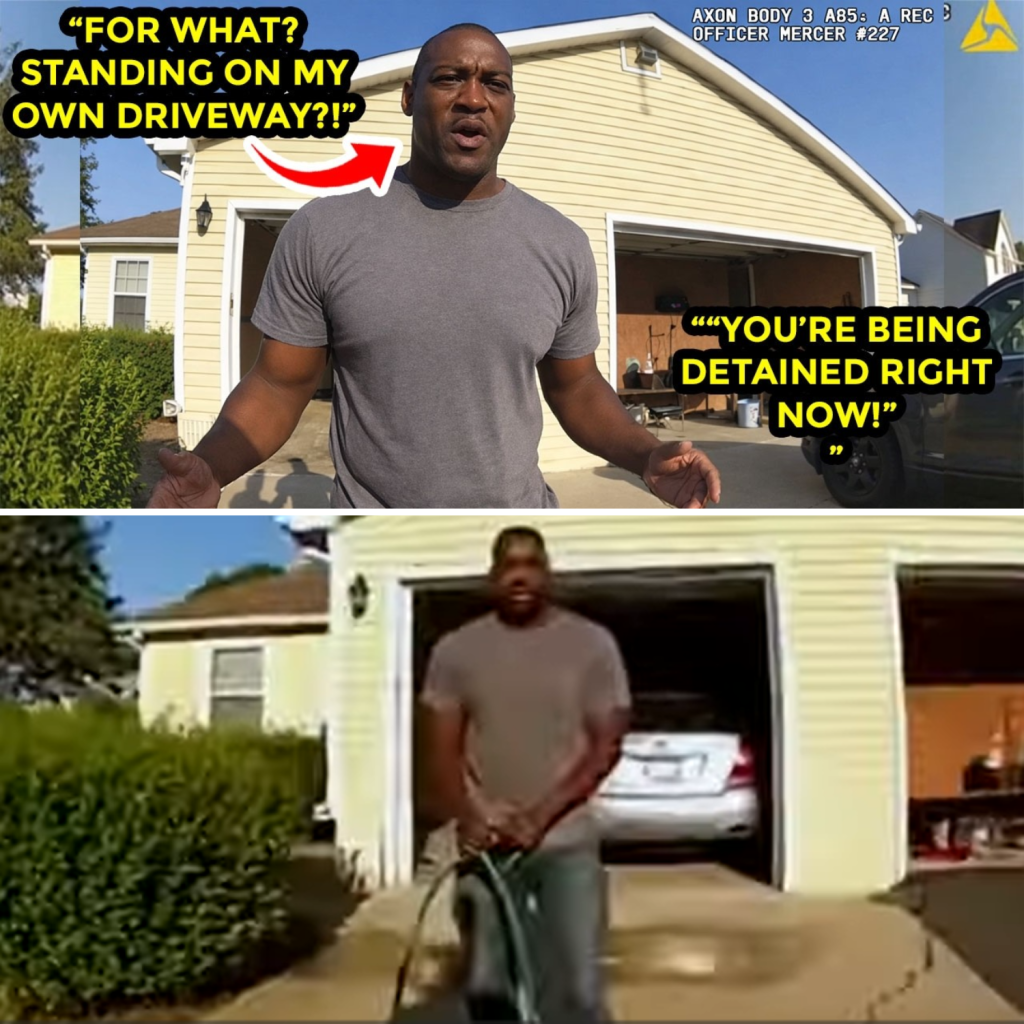
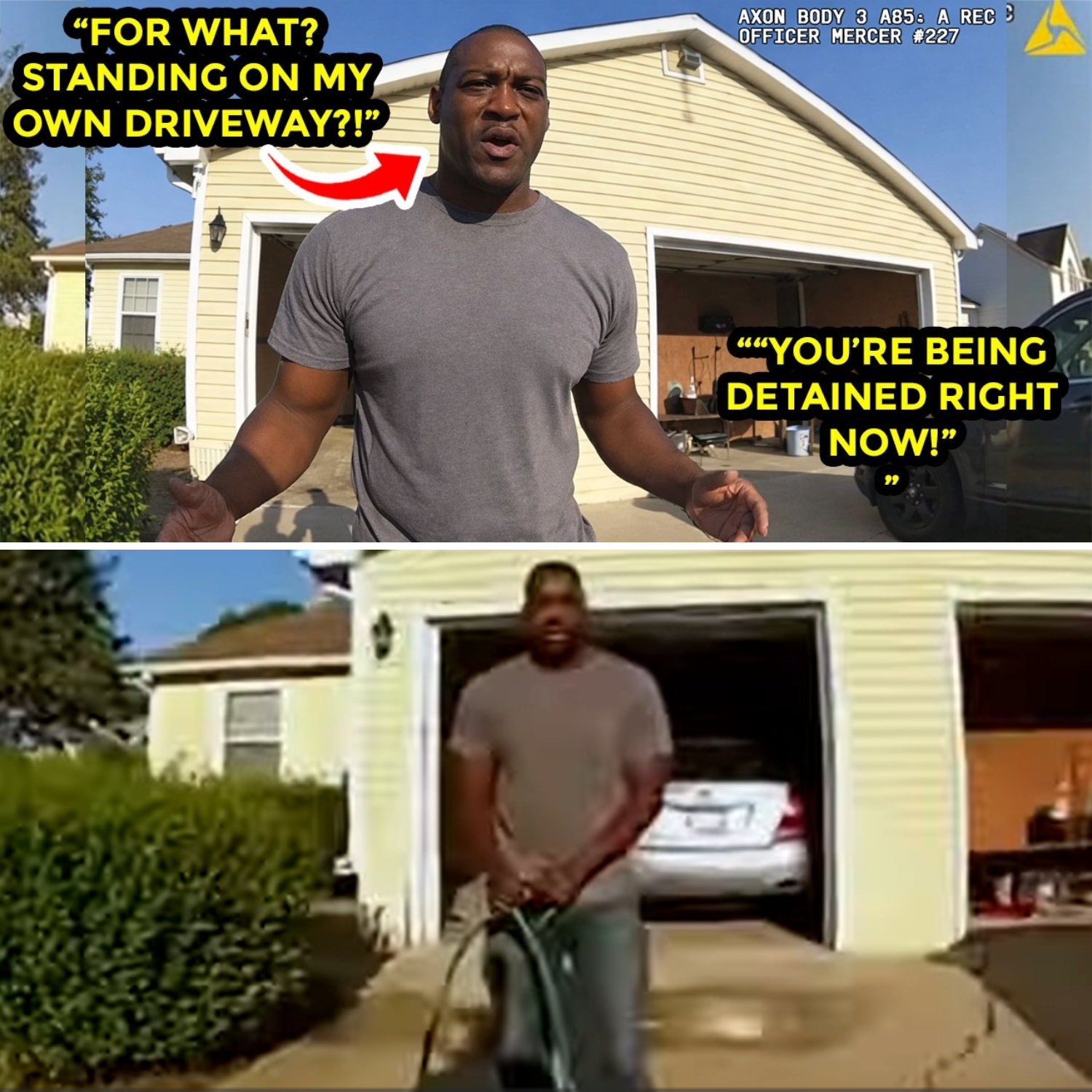
It was just another morning for Jamal Everett, a 45-year-old civil rights attorney in Florida, when a quiet routine turned into a nightmare. As the sun was rising over his suburban neighborhood, Jamal was outside watering his garden at his home, unaware that an officer would soon arrive to challenge his right to even be there.
Jamal had lived in his house for over a decade. He had worked tirelessly to build a life for himself, his wife, and their two children. His property was his pride, and on that morning, he was simply tending to his garden, enjoying the calm of the early day. But what followed would not only change his life but expose the deeply ingrained racial biases that still plague law enforcement across the United States.
A Misunderstanding That Shouldn’t Have Happened
Officer Kyle Braden, a five-year veteran of the local police force, arrived at Jamal’s home after receiving a vague call about “suspicious activity.” Braden didn’t bother to investigate the situation before jumping to conclusions. He saw a black man in a high-end car parked on a quiet street in front of a well-kept house, and his assumptions filled in the blanks. To Officer Braden, Jamal didn’t look like he belonged.
Braden approached Jamal, who was standing on his own property, watering his lawn, and ordered him to step away from his vehicle. “Stay where you are,” Braden barked, his tone commanding. Jamal, who had been trained in law and knew his rights, asked calmly, “What’s the issue, officer? This is my property.”
The officer, however, wasn’t interested in reasoning or clarification. Instead, Braden told Jamal that he was being detained due to a call reporting suspicious activity. When Jamal pointed out that he was merely watering his lawn, the officer continued to escalate the situation, ordering him to step away from his house, despite the fact that Jamal was doing nothing wrong.
The Role of Racial Bias
Jamal’s calm demeanor and insistence on his rights only seemed to intensify Braden’s frustrations. Officer Braden, fueled by racial bias and a disregard for Jamal’s legal rights, began to treat him like a criminal. Despite Jamal repeatedly explaining that he owned the property, Braden remained hostile and dismissive.
In a stunning display of bias, Braden’s words dripped with assumption and aggression, and his body language only reinforced his belief that Jamal, a well-dressed black man, didn’t belong.
Jamal, feeling the weight of the officer’s prejudice, knew that this situation had gone beyond a simple misunderstanding. He wasn’t just being detained; he was being discriminated against. This wasn’t the first time Jamal had seen injustice, but it was the first time he was on the receiving end of it.
Escalation and Arrest
As Braden moved closer to Jamal, the tension in the air became palpable. Jamal, knowing how these encounters could escalate, kept his hands visible and made sure his actions were deliberate. “I am a civil rights attorney,” Jamal stated calmly, trying to de-escalate the situation. But Braden wasn’t having it. He ordered Jamal to turn around and place his hands behind his back.
Jamal, still calm, continued to assert his rights, telling the officer that he was being detained without cause. “You need a warrant to detain me,” Jamal reminded the officer, hoping to defuse the situation with legal facts. Instead, Officer Braden’s response was simply to move forward with the arrest.
Despite Jamal’s repeated efforts to de-escalate, Braden handcuffed him and placed him under arrest. The surreal nature of the arrest was hard to ignore. Jamal, a lawyer who had dedicated his life to protecting the rights of others, was being treated like a criminal in front of his own home.
Neighbors began to notice the commotion. Some peeked through their windows, others gathered outside, and a few even began to record the interaction. They watched as Jamal, the victim of a gross miscarriage of justice, remained composed, all while the officer’s bias became increasingly obvious.
The Realization: A Fight for Justice Begins
Jamal’s phone was recording the entire interaction. As the cuffs clicked into place, he knew that this footage was not just evidence of his wrongful arrest; it was evidence of a system that continued to function on racial bias. The officers didn’t seem to care about the fire trucks in the background or the fact that Jamal had been calmly watering his lawn. They saw a black man and made their assumptions based on that alone.
When the situation reached the precinct, Jamal was still in disbelief. His professional demeanor had not protected him from the officer’s racial prejudice. But Jamal, ever the lawyer, understood that the only way to combat injustice was through the legal system. He began the process of documenting every detail, knowing that this was not an isolated incident—it was part of a larger pattern of racial profiling that needed to be addressed.
The Aftermath: A Legal Battle Unfolds
Within hours, Jamal’s story began to gain traction. Neighbors who had witnessed the incident, along with the bystander video footage, painted a clear picture: Jamal, a respected civil rights attorney and homeowner, had been wrongfully detained based solely on racial bias.
The footage went viral. Local news outlets picked up the story, and soon, national media organizations were covering the injustice. Jamal’s lawyer, a seasoned civil rights advocate, immediately filed a lawsuit against the city and the officers involved. The lawsuit included claims of false arrest, racial profiling, emotional distress, and violation of Jamal’s Fourth Amendment rights.
The Settlement: Accountability at a High Price
As the legal battle unfolded, the city’s police department faced immense pressure. Internal investigations revealed a troubling pattern in Officer Braden’s conduct. It was discovered that Braden had a history of racially motivated interactions, with multiple complaints against him over the years. However, despite these complaints, Braden had been allowed to remain on duty.
The lawsuit, combined with public pressure and the undeniable evidence from the footage, led to a quick settlement. In December 2024, the city agreed to pay Jamal Everett $2.8 million in damages. The settlement was not just a financial victory—it was a clear statement that racial profiling and abuse of power would not be tolerated.
Along with the monetary settlement, the city implemented reforms, including mandatory bias training for all officers and the creation of an independent oversight board to monitor police conduct. The goal was to prevent such incidents from happening again, but Jamal knew that the real change had to come from within the system itself.
The Larger Impact: Systemic Change Begins
For Jamal, the $2.8 million settlement was important, but it wasn’t the ultimate goal. His victory was about more than just the money—it was about sending a message. This was a victory for every person who had ever been unjustly detained, profiled, or mistreated by law enforcement.
The reforms that followed the settlement were significant, but they were just the beginning. The larger fight for racial justice and police accountability continued. Jamal, a man who had dedicated his life to defending the rights of others, was now using his own experience to fight for a system that would be held accountable for its actions.
The case became a rallying point for civil rights activists and legal experts alike. It was a reminder that standing up to injustice, no matter how personal or painful, could create lasting change.
Jamal’s story serves as a testament to the power of legal knowledge, courage, and persistence in the face of systemic racism. He proved that the law could protect those who know how to wield it, even when the system initially turns against them.
Conclusion: A Legacy of Justice
Jamal Everett’s fight for justice began on the front lawn of his home, but its impact has echoed far beyond that single driveway. His experience of being wrongfully detained by Officer Braden and the subsequent legal victory has changed the landscape of local policing. The settlement and reforms were important steps forward, but Jamal knows that the real battle for racial equality and justice is far from over.
The case highlighted the deep-rooted biases that still exist in law enforcement and the need for real, systemic change. It proved that accountability is possible, but only when individuals like Jamal refuse to back down, even when the odds are stacked against them. And in doing so, Jamal Everett has left a legacy—a legacy of resilience, courage, and the unwavering belief that justice can prevail.
As Jamal continues his work, he carries with him the knowledge that the fight for racial equality is ongoing. The lessons learned from this encounter will continue to shape his advocacy, ensuring that he remains a steadfast force for justice in a world that still has much work to do.