What began as a birthday lunch in a sunlit dining room ended in handcuffs, screaming children, and a $2.5 million settlement that cost a police officer his career and forced a city to confront what it had quietly tolerated for years.
Officer Vincent Holland walked into Mason Street Bistro believing he was responding to a simple report: possible credit card fraud at a corner table.
What he didn’t realize was that every second of what followed would be captured from multiple angles — and that those cameras would eventually put him on the other side of a courtroom.
A Celebration Interrupted
Mason Street Bistro was known for quiet celebrations and business lunches. Floor-to-ceiling windows let in warm afternoon light. Polished wood tables and fresh flowers created the kind of atmosphere where people lowered their voices and stayed awhile.
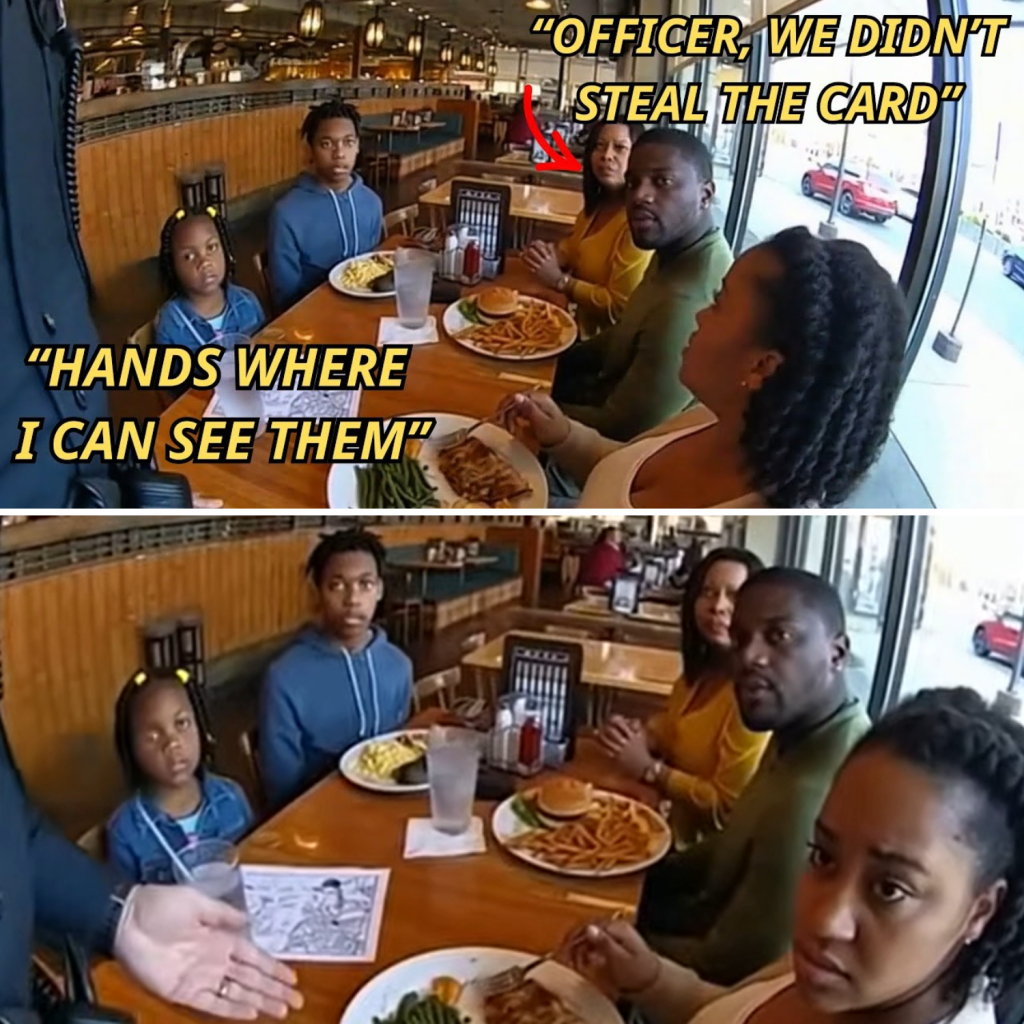
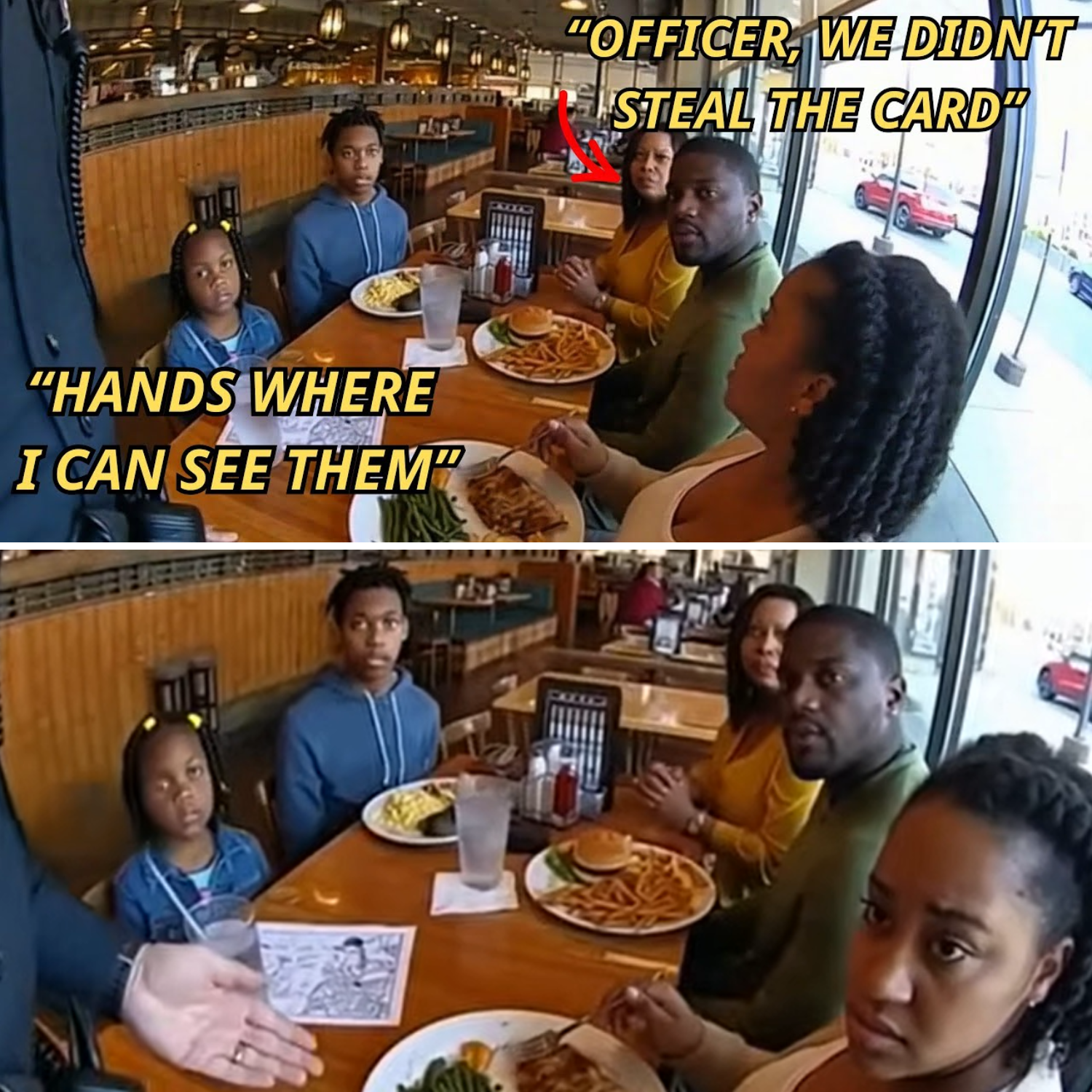
At a corner table near the window, the Patterson family had gathered for Gloria Patterson’s 59th birthday.
Robert Patterson, 62, a recently retired postal worker, sat at the head of the table. His wife, Gloria, a longtime elementary school principal, smiled as her grandchildren debated who would order dessert first.
Their son, Anthony — a software engineer — and his wife, Michelle, a nurse, sat across from them. Ten-year-old Marcus colored quietly. Seven-year-old Jasmine whispered something to her grandmother and giggled.
It was ordinary. Joyful. Harmless.
At 1:32 p.m., the front door opened.
Officer Vincent Holland entered with purpose.
A Call Based on a “Feeling”
The restaurant manager, Brian Foster, had phoned police minutes earlier. He did not report a fight, a stolen wallet, or an altercation.
He reported a feeling.
Something “seemed off” about the family using credit cards that “didn’t look right.”
That was all it took.
Holland had worn a badge for eleven years. His personnel file, later examined in federal court, showed fourteen complaints of racial profiling in six years. None resulted in serious discipline. Some were dismissed outright.
The pattern was familiar: act first, justify later.
When Holland’s eyes landed on the Patterson table, his posture stiffened. His hand rested near his belt.
He did not approach the manager first to clarify details. He did not ask for receipts. He did not review payment records.
He walked directly to the family.
“Identification from everyone at this table. Now.”
The laughter stopped.
Public Accusation
“For what reason?” Robert Patterson asked calmly.
“We have a report of stolen credit cards being used here.”
The words echoed across the dining room.
Michelle’s hand flew to her chest. Marcus gripped his father’s sleeve. Jasmine looked up, confused.
“That’s not possible,” Robert said. “These are our cards. We can show you whatever you need.”
Holland didn’t respond to the offer.
“Stand up. Hands where I can see them.”
Anthony rose slowly. “Officer, we’re happy to clear this up, but we haven’t done anything wrong.”
Holland stepped closer, his tone hardening.
“You telling me how to do my job?”
The room tightened.
“I said stand up.”
Metal handcuffs clicked around Anthony’s wrists.
Gasps rippled through the restaurant.
The Children
Marcus’s face went pale. Jasmine began to cry. Michelle reached for both children, trying to shield them.
“Dad!” Marcus shouted.
“It’s okay,” Anthony said, though it clearly wasn’t.
Robert was ordered up next.
“This is humiliating,” he said quietly.
Holland did not engage. He tightened cuffs around Robert’s wrists.
Phones were raised now without hesitation.
At least seven customers recorded openly.
One woman stepped forward. “Officer, what’s your badge number?”
“Ma’am, stay out of this.”
“I’m an attorney,” she said evenly. “And you’re violating their rights.”
The assistant manager approached. “Officer, our security cameras show the same card was used the entire time. Every transaction matches.”
Holland refused to look.
“I’m conducting an investigation.”
Based on what?
He did not say.
Cameras Don’t Blink
Security footage from Mason Street Bistro later told a clear story:
• The family arrived calmly.
• They ordered normally.
• No confrontation occurred prior to police arrival.
• Holland bypassed the manager and approached directly.
• He escalated without reviewing payment records.
Body camera footage confirmed his tone, his refusal to verify, and his decision to detain despite available exculpatory information.
Witness statements poured in — fifty-three in total — including one from a retired judge dining two tables away.
The evidence was overwhelming.
The Station
Within an hour, Anthony and Robert Patterson sat in separate interview rooms.
Their credit cards were scanned. Valid.
Their IDs were run. Clean.
No fraud alert. No stolen reports. No warrants.
Detective Rachel Ortiz reviewed the file.
“You brought them in for this?” she asked Holland.
“The manager reported suspicious activity.”
“What activity?” she pressed.
There was none.
Ortiz unlocked the cuffs herself.
“You’re free to go. This should never have happened.”
But freedom did not erase humiliation.
A Lawsuit That Wouldn’t Go Quietly
The Pattersons hired civil rights attorney Sarah Jennings — the same woman who had filmed the arrest.
The lawsuit alleged:
• False arrest
• Unlawful detention
• Racial profiling
• Emotional trauma inflicted in front of minors
Discovery reopened Holland’s entire disciplinary history.
Fourteen prior complaints.
Minimal consequences.
Internal notes praising “proactivity” and “initiative.”
The city offered $500,000.
Jennings rejected it.
“This isn’t about a misunderstanding,” she said. “It’s about a pattern.”
The offer increased to $1.2 million.
Again rejected.
“Let a jury watch the video,” she told mediators. “Let them see the children.”
The city recalculated.
Final settlement: $2.5 million and mandated reforms.
Consequences
Officer Vincent Holland was terminated.
Internal affairs reopened prior cases. Several convictions tied to his testimony were reviewed.
Under federal scrutiny, Holland was charged with deprivation of rights under color of law. He ultimately pleaded guilty to avoid prison time.
Probation. Community service. Permanent ban from law enforcement.
His partner, Officer Luis Mendoza, was also fired for participating in unlawful detention despite visible doubt.
The police chief resigned months later amid public pressure.
Departmental reforms followed:
• Mandatory verification of alleged financial crimes before detention
• Supervisory review required before public handcuffing in nonviolent cases
• Bias training tied to promotion eligibility
• Independent civilian oversight with subpoena power
The Aftermath for the Family
Money does not erase memory.
Jasmine began asking if they were “bad people.”
Marcus became withdrawn, obsessively researching civil rights cases online.
Gloria stopped wanting to dine out.
Anthony stiffened at the sight of every patrol car.
Healing required therapy. Time. Intention.
On the one-year anniversary, the family returned to Mason Street Bistro under new management.
Same corner table.
Same sunlight.
No police.
Just cake.
The Larger Truth
This was never about credit card fraud.
It was about assumption replacing evidence.
It was about how quickly authority can turn into spectacle when bias guides a badge.
Officer Holland did not investigate first and detain later.
He detained first and looked for justification afterward.
The cameras ensured the sequence could not be rewritten.
Justice in this case was not perfect.
It was expensive.
But it was visible.
And sometimes visibility is what forces a system to correct itself.
Because the truth is simple:
If a family celebrating a birthday can be handcuffed on a hunch, then the problem is not suspicion.
It is permission.
And on that afternoon, one camera revoked it.