The Night Everything Changed for Adrien Ellison
The scene was set on an ordinary night in a quiet suburban neighborhood. Adrien Ellison, 48 years old, a retired wide receiver from the NFL, was just completing a normal evening routine. He lived a quiet life now, having stepped away from the limelight of sports and finding peace in a simple home with minimal interactions with the community. His days were filled with checking messages, catching up on work, and living a low-key life away from the cameras. But that night, things took a turn.
Adrien was going about his business when he remembered the mail. It was just a short drive from his driveway to the community mailbox, and with his house clothes on and the simplicity of a quiet evening, he chose to drive rather than walk. Little did he know, his drive would end up spiraling into a night of accusations, a dramatic confrontation, and a battle for his dignity.
The Wrong Assumptions and the First Signs of Trouble
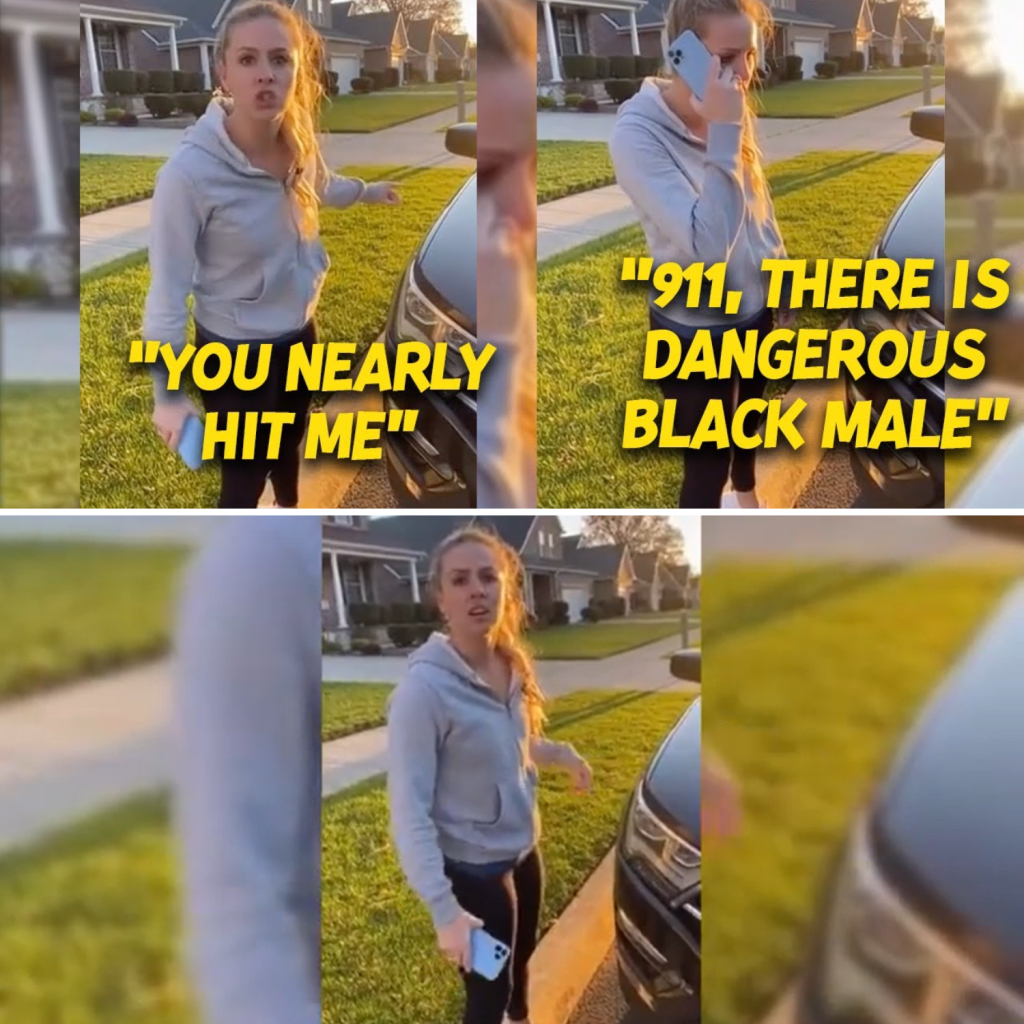
Caitlyn Davis, Adrien’s neighbor, had been watching. She was standing outside her home when she saw Adrien’s SUV slowly rolling down the street toward the mailbox. For reasons only she could explain in her mind, Caitlyn decided that Adrien was speeding through the neighborhood. As soon as Adrien stopped to get out of his car, Caitlyn’s mind was set. The story she would tell the police was already written in her head.
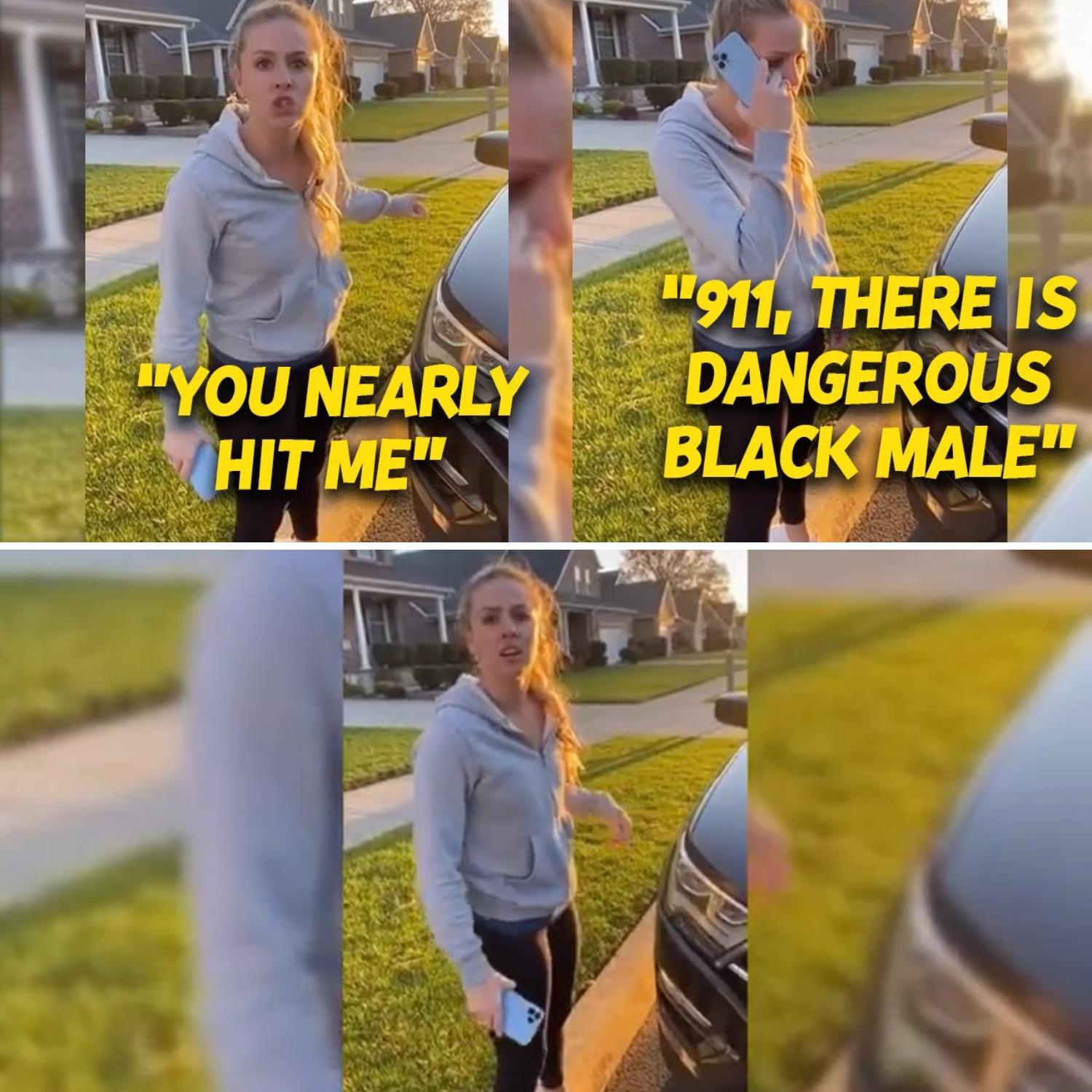
When Adrien approached the mailbox and opened his door to retrieve his mail, Caitlyn stepped forward, her voice already raised, accusing him of speeding and nearly hitting her. In that moment, Adrien realized that the situation was escalating far too quickly. It was an accusation he did not deserve, one based purely on her perception and not any actual event.
But Adrien was no stranger to what could happen next. He had lived enough of his life under the spotlight of racism, the kind that sees a black man as a threat regardless of the situation. He didn’t raise his voice. Instead, he calmly explained that he had been driving slowly and that there had been no close call.
Escalation and the 911 Call
Caitlyn didn’t accept Adrien’s explanation. She moved closer, continuing to escalate her story. She accused him of being confrontational, suggested he was intimidating, and ultimately dialed 911. Adrien, knowing exactly how these situations could turn out, picked up his phone and began recording the conversation. He didn’t argue; he just started documenting everything.
When Caitlyn spoke to the 911 dispatcher, her story became increasingly dramatic. She described Adrien as driving dangerously, speeding, and nearly hitting her. She mentioned how he had confronted her aggressively, as though she was the victim of a malicious attack. The details she gave to the dispatcher didn’t match what Adrien had said, but the dispatcher took the call seriously and sent officers to the scene.
Adrien didn’t get upset. Instead, he stood there, calmly recording, waiting for the officers to arrive. The truth was on his side, and he knew that eventually, the story would be clear. But there was always the fear that without proper documentation, the version of events would be written in Caitlyn’s favor — a simple case of a black man being accused, judged, and potentially arrested on the spot.
The Arrival of the Police
Within minutes, two police cars pulled up. The officers were polite but professional, assessing the situation. Caitlyn immediately began to recount her version of the story, repeating her accusation of reckless driving. Adrien calmly explained the facts — that he had been going slowly, that there was no near collision, and that the address issue was clear.
As he stood there with his phone in hand, he offered the recording to the officers. The first officer looked at it briefly, while the second officer took a more measured approach, asking both parties for their stories. Caitlyn stuck to her version, but when the officer checked the video, it was clear that her story didn’t match the facts. The video showed no speeding, no near collision, and no confrontation at all. It simply showed a calm man getting his mail.
The officers took a step back and began to process the situation. They listened to Adrien’s side and examined the evidence, and it was clear that Caitlyn’s story had been fabricated. The police told her that there would be no citation, no arrest, and nothing would be added to the report that could harm Adrien.
The Fallout: Public Attention and the Power of Documentation
Adrien knew that if he had not recorded the incident, things might have gone differently. The officers might have believed the accusation, or worse, Caitlyn might have turned her version of events into a public narrative that would have followed him for months. But the video ensured that the truth was undeniable. It showed that his drive had been slow, the alleged confrontation never happened, and the accusations were nothing more than a smear job.
Adrien decided to take things further. He posted the video online, explaining exactly what happened and showing the evidence for what it was — a false accusation that could have had serious consequences for him. The video spread like wildfire. People watched it, shared it, and discussed it.
The public response was swift. Some defended Caitlyn, calling it a misunderstanding or an overreaction, while others pointed out how her actions were rooted in racial bias. The fact that the story was now in the public eye, supported by the undeniable truth of Adrien’s video, meant that Caitlyn could no longer hide behind her version of events. It was out there for everyone to see, and she had to face the consequences.
Legal Action and Consequences for Caitlyn
The legal implications of Caitlyn’s false accusations were not immediately clear, but it didn’t take long for Adrien to make his intentions known. He contacted a civil rights lawyer, and soon enough, the case moved from a neighborhood dispute to a matter of public concern. The lawyer advised him to pursue the case fully, not just for the sake of justice, but to ensure that others didn’t face similar experiences without recourse.
The legal process was slow but deliberate. The 911 call, Caitlyn’s testimony, and the video footage were all part of the evidence that could not be ignored. Caitlyn’s attempt to manipulate the situation backfired in a major way. Her actions were considered not just an overreaction, but an abuse of the legal system, and she was formally charged with filing a false police report.
The settlement came quickly. Caitlyn was fined and required to participate in community service, and her reputation in the neighborhood was severely damaged. She would no longer be able to play the role of the concerned neighbor. She was now the person who had used false accusations to try to have someone arrested for no reason.
Adrien’s Reflection and the Importance of Accountability
For Adrien, the resolution of the case brought mixed feelings. He was glad that the truth had been exposed, but it didn’t erase the fear he had felt in that moment when Caitlyn had accused him. He knew how quickly things could escalate for people who looked like him. But he also knew that he had made the right choice by documenting the incident, by standing up for himself, and by refusing to let the situation slide.
The case wasn’t just about one bad encounter. It was about a larger issue of how bias and racial assumptions can shape interactions, even in everyday situations. Adrien’s decision to record the event and take it public was a statement that people could no longer be passive bystanders when they were wrongfully accused. He showed the world that sometimes the system doesn’t work on its own — it needs people to push for justice, to document the facts, and to hold others accountable.
A Moment of Change
What Adrien did was not just stand up for himself. He also stood up for everyone who had ever been in a similar situation and didn’t have the means or courage to defend themselves. His actions made it clear that sometimes, the only way to ensure justice is to fight for it — even when the odds seem stacked against you. In this case, Adrien’s decision to act made all the difference. It ensured that the truth would win out and that those who tried to manipulate the system would face the consequences.
In the end, Adrien Ellison’s decision to stand his ground and document the incident didn’t just change his life. It sent a powerful message about the importance of truth, accountability, and the courage to challenge injustice wherever it appears.