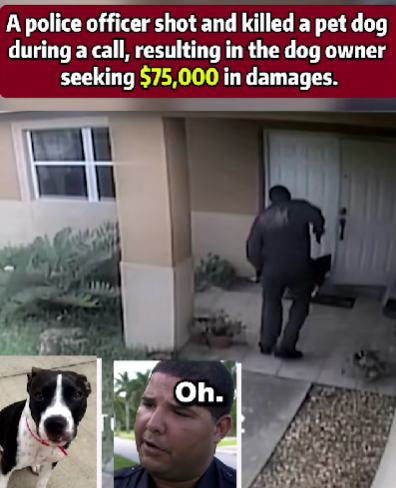
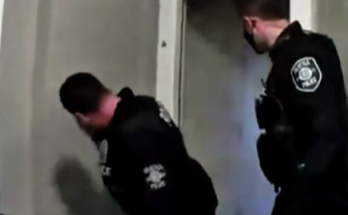
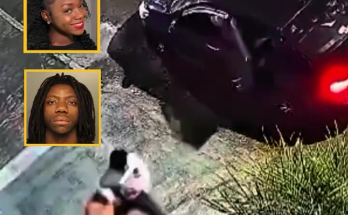
A deeply emotional incident has drawn widespread attention after a police officer, responding to a call, shot and k*lled a family dog — an event that has left the pet’s owner devastated and now seeking $75,000 in damages. The footage from a home security camera shows the heartbreaking moment that sparked outrage across social media and reignited national debate about the use of force on animals during police encounters.
The video shows the officer approaching the front porch of a home during what appears to be a routine call. Moments later, a dog runs into the frame, and within seconds, the officer draws his firearm and fires. The suddenness of the moment has prompted thousands of viewers to question whether the use of lethal force was necessary, especially given the dog’s size and behavior in the footage.
Pet owners who watched the video described it as “gut-wrenching,” “unbelievably fast,” and “hard to watch.” For many, the dog was not just a pet but a family member — and the thought of losing such a companion in an instant is overwhelming. Online discussions have been filled with stories from people who view their animals as emotional support, loyal friends, and beloved parts of their household.
The dog’s owner has filed a claim seeking $75,000 in damages, citing emotional distress, loss of companionship, and the traumatic nature of the incident. Supporters argue that pets hold significant emotional value and that sudden, preventable loss deserves accountability. Others stress the need for better training, including non-lethal techniques and de-escalation methods when interacting with household animals.
Law enforcement trainers explain that officers commonly encounter dogs during calls — often in unfamiliar environments, often with little time to assess the behavior of the animal. Some dogs can appear threatening even when they are not, and high-stress situations can lead to quick decisions. However, advocates emphasize that dogs typically display clear body language that trained officers can learn to read, reducing the likelihood of tragic mistakes.
In recent years, numerous cities have expanded training for officers on how to handle interactions with pets, offering guidance on understanding dog behavior, recognizing signs of fear versus aggression, and using non-lethal tools such as pepper spray, shields, or tactical retreat when possible. Critics of the incident argue that measures like these must become standard across all departments.
On social media, thousands of users have expressed sympathy for the family, many calling for justice or systemic change. Others urge caution in judging the officer too harshly, noting that official reports and full investigations are necessary before conclusions can be drawn. Some hope the case will lead to further discussions on balancing officer safety with compassion toward family pets.
As the legal process unfolds, one thing is clear: this incident has struck a powerful emotional chord. For many, it represents more than a legal dispute — it’s a reminder of how quickly moments can turn tragic, how deeply people bond with their pets, and how essential it is to prioritize understanding and safety for both officers and animals during police calls.
If you’d like, I can also create a shorter caption, a neutral summary, or a softer pet-focused version.