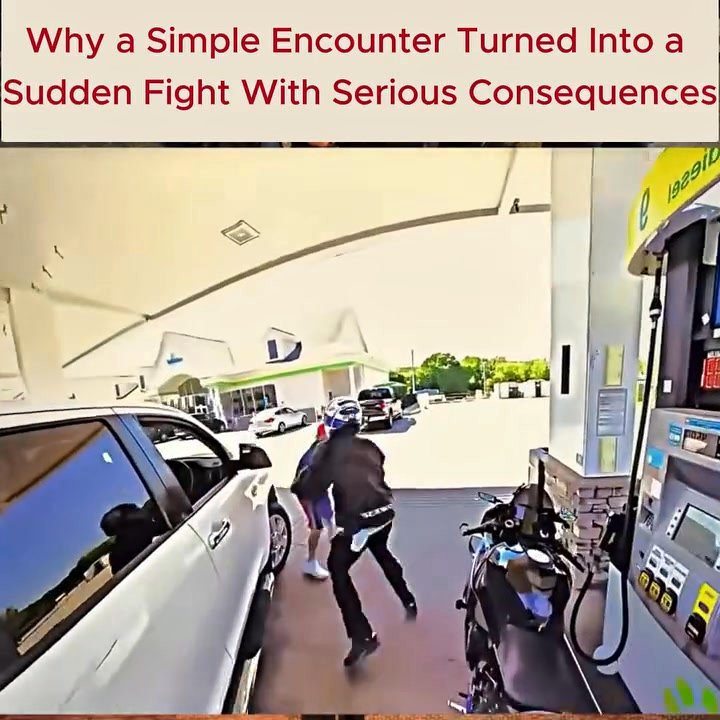
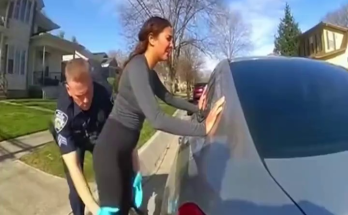
The bodycam footage opens in a way that feels deceptively calm. A public space. A few people standing close enough to be uncomfortable, but not yet close enough to look dangerous. Voices are raised slightly, but nothing that immediately signals a fight is coming. At first, it looks like a disagreement that will burn out on its own.
Then something shifts.
The camera captures a brief exchange that seems insignificant in the moment. A comment. A gesture. A step forward that crosses an invisible line. It is the kind of moment most people wouldn’t think twice about, yet it becomes the turning point for everything that follows.
Officers arrive just as the tension is thick enough to feel. They don’t rush in aggressively. They assess. They listen. The people involved speak over one another, each convinced the other is at fault. The bodycam records overlapping voices and incomplete explanations that only deepen the confusion.
What becomes clear quickly is that this didn’t start with violence. It started with frustration. A disagreement that escalated because neither side felt heard, and neither side was willing to step back.
The officers attempt to separate the individuals, creating physical space to cool the situation. Their tone is calm, their instructions clear. For a moment, it seems to work. The raised voices lower. The movements slow. The tension appears to loosen.
But the calm doesn’t last.
One person circles back into the conversation after being told to step away. Another responds instantly. The bodycam captures the exact second when restraint disappears. It is fast and unplanned, driven more by emotion than intent.
The fight breaks out suddenly.
Officers react immediately, moving in to stop the physical contact before it spreads. Commands are shouted clearly, not in anger, but urgency. The scene shifts from argument to chaos in seconds.
The bodycam shows how quickly control can be lost in close quarters. What looked manageable moments earlier now requires full attention and coordination. Officers work to separate the individuals while ensuring no one nearby gets pulled into the conflict.
As the struggle ends, the aftermath settles heavily over the scene. Breathing is heavy. Movements slow. The adrenaline drains almost as fast as it arrived. The bodycam captures the silence that follows, broken only by instructions and controlled communication.
Officers begin piecing together what actually caused the fight. Each person involved tells a different version of events. The reasons overlap but never quite align. One says it was a misunderstanding. Another insists it was intentional. The truth sits somewhere in between, shaped by emotion rather than logic.
What stands out in the footage is how preventable it all feels in hindsight. Multiple chances to walk away. Several moments where the outcome could have changed. Each missed opportunity adds weight to the ending.
The officers explain what will happen next. Their tone is firm but even. The explanation is not rushed. It reflects the seriousness of letting a conflict turn physical in a public space.
The individuals involved react differently. One appears shocked by how far it went. Another grows quiet, realizing that the moment of anger now carries lasting consequences. The bodycam captures these reactions without judgment, letting the reality speak for itself.
As the scene stabilizes, bystanders slowly drift away. What drew their attention minutes earlier no longer holds it. The public space returns to normal, as if nothing happened.
But something did happen.
Reviewing the footage later, viewers often ask the same questions. Why didn’t someone walk away sooner. Why didn’t words stay words. Why did it turn physical at all.
The bodycam offers no simple answer. It shows how quickly emotions can override reason when pride, anger, or misunderstanding take control.
The ending of the fight is not dramatic. There is no drawn out confrontation. There is no sense of victory. Just procedure, accountability, and the quiet realization that a moment of conflict has reshaped what comes next.
Officers finish documenting the incident carefully. Names, statements, observations. Every detail matters now, even though it didn’t seem to matter when tempers first flared.
What makes the footage compelling is not the fight itself, but the buildup. The way small choices stack together. The way tension grows quietly before exploding without warning.
For viewers, the curiosity lies in the contrast. How something so ordinary became something so serious. How quickly the outcome changed once restraint disappeared.
By the end of the video, the scene looks calm again. The space is empty. The noise is gone. Only the recording preserves the truth of what unfolded there.
The fight did not begin with intent to cause harm. It began with refusal to back down.
And the ending is not defined by who threw the first move, but by what followed after no one stepped away. That is the part that lingers.
Because the question is not just why they fought. The question is why it ended the way it did.