Playrooms of Death
Jennifer kissed her daughter Emma on the forehead and waved goodbye at 7:45 AM on September 12th, 2025. Bright Futures Learning Center glowed in the early sunlight. Tiny backpacks bounced as children ran in pairs. Emma laughed as she joined her friends, pointing at the butterfly mural on the wall. Jennifer smiled, reassured by the center’s flawless reviews, its licensed status, and the cheerful demeanor of the teachers. She had no reason to worry. Not one.
Two floors below, another world hummed in silence. Workers moved swiftly, counting, labeling, sealing. Kilograms of fentanyl. Sixty kilos every single day. Each package meticulously wrapped, hidden beneath floors of happy chaos. Naptime rooms doubled as cash counting offices. Playrooms were above, where children played with blocks and dolls. Slide ladders hid compartments in their structure. Tiny chairs contained stacks of bills. The innocent laughter above masked a criminal operation so vast it could have funded a small country.
Special Agent Elena Torres had been tracking the network for months. At first, the story seemed impossible. A cartel running a multi-billion-dollar drug operation beneath children’s feet? It sounded like fiction. Yet data never lies. Whistleblower tips came in small, cryptic fragments. Anonymous emails. Accounts traced to shell corporations with no physical offices. Licensing paperwork that was too perfect. Someone wanted this to be invisible—and they succeeded for years.
The Scope of the Empire
Elena discovered the shocking truth: the cartel had acquired 40 daycare centers across six states in just 18 months. Eight thousand children attended daily. Parents trusted the centers completely. Bright Futures Learning Center. Sunshine Kids Academy. Little Angels Learning Center. On the surface, they were normal, even exemplary. But every basement hid a drug-processing operation. Every playroom above was a shield.
Over three years, the operation had processed 2,628 tons of fentanyl, worth an estimated $130 billion. Agents were aghast. How could something this massive stay under regulators’ noses? Background checks, licensing boards, insurance inspections—all bypassed. The cartel had anticipated every oversight. Every visit, every audit, every routine inspection.
Elena pored over the data for hours. She traced shipments. Cash flows. Employees with falsified identities. Some employees were teenagers coerced into silence. Others were veterans of cartel operations disguised as daycare staff. One teacher’s ledger included “playroom schedule” alongside “shipment dispatch times.” The details made her stomach turn.
The Raid Plan
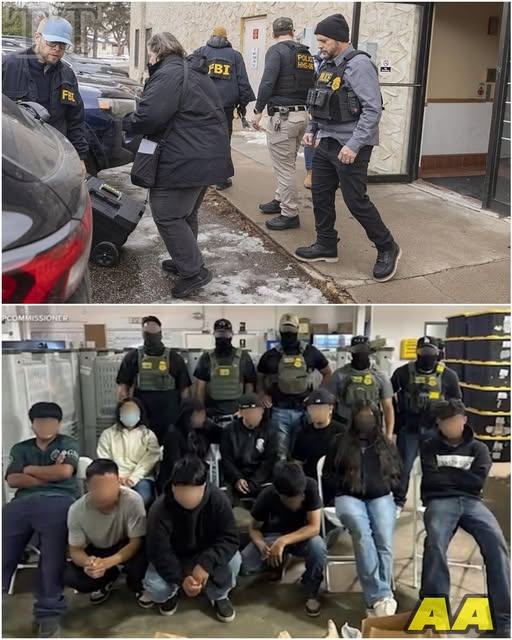
The FBI’s response was unprecedented. Two thousand agents. Forty simultaneous raids. Saturday, 6 AM. The timing was calculated: children would be arriving, but the staff involved in the drug operations had to be caught in the act. There could be no mistakes. Too many lives were at stake—not just the children, but the agents and officers involved.
Every raid required coordination down to the second. Helicopters hovered above. SWAT teams entered through back doors. Surveillance drones monitored exits. Backup teams were stationed at neighboring streets. It was the largest operation of its kind.
Elena oversaw the plan from a command center. Lines of communication blinked with green and red lights. Her hands trembled slightly. Not from fear, but from anticipation. She knew the cartel had contingency plans. She knew some employees would trigger alarms, call hidden contacts, or attempt escape. Phase Two was already being whispered about in encrypted messages she could barely trace.
Execution and Chaos
6:02 AM. The first teams moved in.
6:05 AM. Shouts echoed through the first center as agents found packaging materials hidden in storage closets, wrapped in cartoon-printed paper to avoid detection.
6:08 AM. Children were ushered into secure zones, their parents still waiting outside, unaware of the danger above their heads.
Across the state, other teams encountered resistance. Locked basements. Trapped stairwells. Hidden compartments built into walls. Some staff attempted to flee, triggering small firefights. Flashbangs deployed. Agents secured exits. By 6:45 AM, the raids were mostly complete.
Yet anomalies appeared almost immediately. Elena watched monitors as encrypted communications flashed on seized devices. Coded messages hinted that the operation wasn’t fully centralized. There were secondary networks, safe houses, and backup processing centers. Someone had anticipated the raids. Someone had built redundancy into the system.
The First Plot Twist
Among the arrested was a teacher known as “Ms. Lila,” who had been working at three different centers over two years. Her calm demeanor suggested she was just a staff member—but Elena noticed something odd: she had memorized schedules, account numbers, and even shipping routes. When pressed during interrogation, she smiled and said nothing.
Elena realized Ms. Lila wasn’t just a worker. She was a node in the network. A walking ledger. And if she were to be released or compromised, she could restart operations anywhere.
Another surprise: financial analysis revealed payments going to new shell companies that had not yet been raided. It was as if the cartel had planned to relocate entirely if the FBI moved in.
The Human Cost
While arrests were being made, the children were kept safe—but the psychological impact was not lost on Elena. Tiny hands, frightened eyes, the realization that their playrooms had been a cover for death-dealing operations. She wondered how much they had noticed. How much they would remember. Could a child unwittingly hold a key to the network simply because they had observed something adults didn’t see?
The cartel had weaponized innocence. The federal response had neutralized the immediate threat, but Elena knew this was only Phase One.
Phase Two Emerges
Hours later, in the command center, Elena noticed irregularities in the seized devices. Encrypted messages pinged from servers offshore. A new pattern emerged—payments, communications, and shipments that had already been rerouted weeks before the raid.
Someone had anticipated the raids. Someone had built a hidden system designed to restart operations automatically if the centers were compromised.
Elena’s stomach dropped. She whispered to herself:
“This isn’t over. It’s just the beginning.”
Betrayal Inside
Elena’s team discovered another complication: one of the agents had been feeding information to unknown parties. Threats to family members had coerced him. Elena had to make a split-second decision: arrest her own colleague or risk the network restarting because of him.
Family games
It was chaos. Every lead seemed to twist into another mystery. Every arrest revealed more hidden layers. The cartel’s reach extended beyond the daycare centers, potentially into law enforcement, banking, and politics.
The Open Ending
By nightfall, the facilities were quiet. Headlines screamed: “FBI Raids 40 Daycare Centers—Drug Empire Destroyed.” Parents returned for their children, oblivious to the horrors beneath the surface.
Elena sat in the command center, staring at her laptop. New encrypted messages, offshore accounts, and coded signals blinked back at her. Phase Two wasn’t coming. It was already active.
Somewhere, in hidden warehouses or new daycare fronts, the operation continued. Someone had learned from the raids. Someone was watching.
The question hung over her like a shadow:
How do you dismantle an empire built on children’s innocence—and what horrors will Phase Two bring when it strikes?
Outside, the city slept. Too quietly.
And Elena knew, with a chill in her spine, that this was far from over.